
Tennis Elbow and Golfer's Elbow
Lateral epicondylitis (tennis elbow) and medial epicondylitis (golfer's elbow) are common overuse tendinopathies that respond well to evidence-based care.

What Is Epicondylitis?
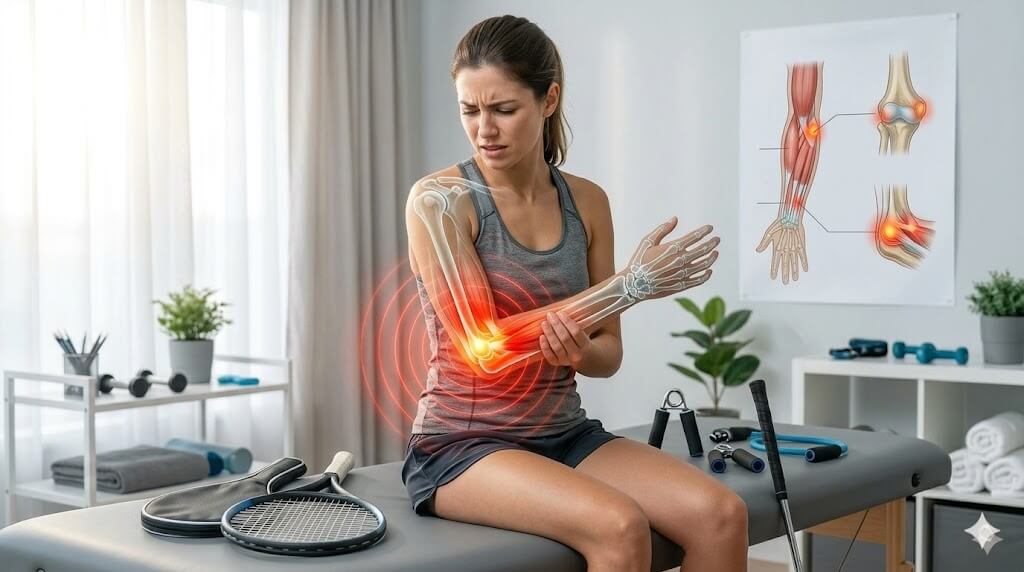
Epicondylitis is the umbrella term for tendinopathy affecting the tendons that attach to either side of the elbow. The two common forms are:
Lateral epicondylitis (tennis elbow). Affects the wrist extensor tendons that attach to the lateral epicondyle, the bony point on the outside of the elbow. Produces pain on the outside of the elbow that flares with gripping, lifting, and wrist extension.
Medial epicondylitis (golfer’s elbow). Affects the wrist flexor and pronator tendons that attach to the medial epicondyle, the bony point on the inside of the elbow. Produces pain on the inside of the elbow that flares with gripping, wrist flexion, and forearm pronation.
Despite the sport-specific names, most cases are not caused by tennis or golf. Both conditions are typically driven by repetitive gripping or loading activities, often related to work, hobbies, or training.
At Function Performance Sport Chiropractic in Oregon City, we treat both forms with the same evidence-based approach, a combination of focused shockwave therapy, precision manual therapy, and progressive tendon loading. This approach consistently outperforms the rest, stretching, and brace combination most patients have already tried. Most chronic cases respond within four to eight weeks of structured care, often with significant change felt in the first few visits.
Stubborn Elbow Pain Is Treatable
If rest, stretching, and braces have not resolved your elbow pain, the right combination of shockwave and progressive loading often will.
Comprehensive Relief for Tennis and Golfer’s Elbow
Why It Lingers Without the Right Care
Epicondylitis is famous for hanging on. Many patients have tried rest, ice, stretching, anti-inflammatories, and counterforce braces for months without lasting change. The reasons for this pattern are specific:
Inadequate loading. Tendons heal through progressive, controlled loading. Pure rest allows the tendon to lose capacity and often worsens chronic cases.
Stretching is not enough. Stretching does not address the underlying tissue changes in chronic tendinopathy. The tendon needs structural stimulation, not just length.
Missed upstream contributors. Shoulder dysfunction, scapular weakness, neck restrictions, and wrist mechanics all affect elbow loading. Treating only the elbow misses these contributors.
Failure to use shockwave when indicated. For chronic cases, focused shockwave therapy is one of the most evidence-supported interventions available. Without it, chronic tendinopathy often plateaus.
Our Treatment Approach
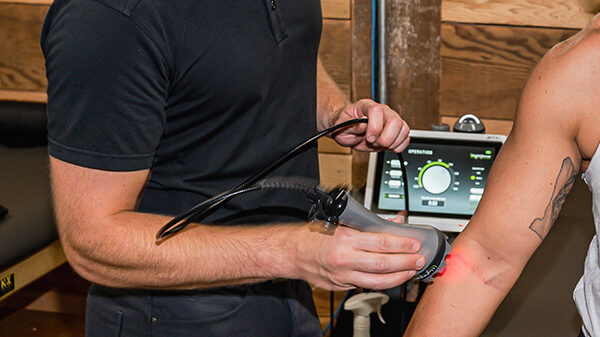
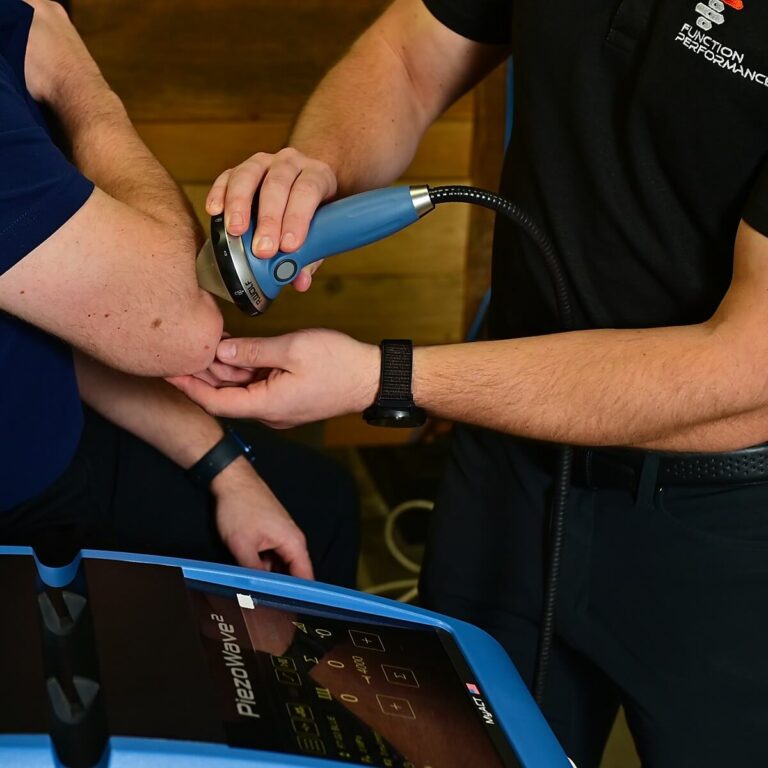
Focused shockwave therapy. For chronic lateral or medial epicondylitis, shockwave is often the most impactful intervention. It stimulates tendon regeneration, breaks down fibrotic tissue, and produces real structural change. Most cases respond within three to six sessions.
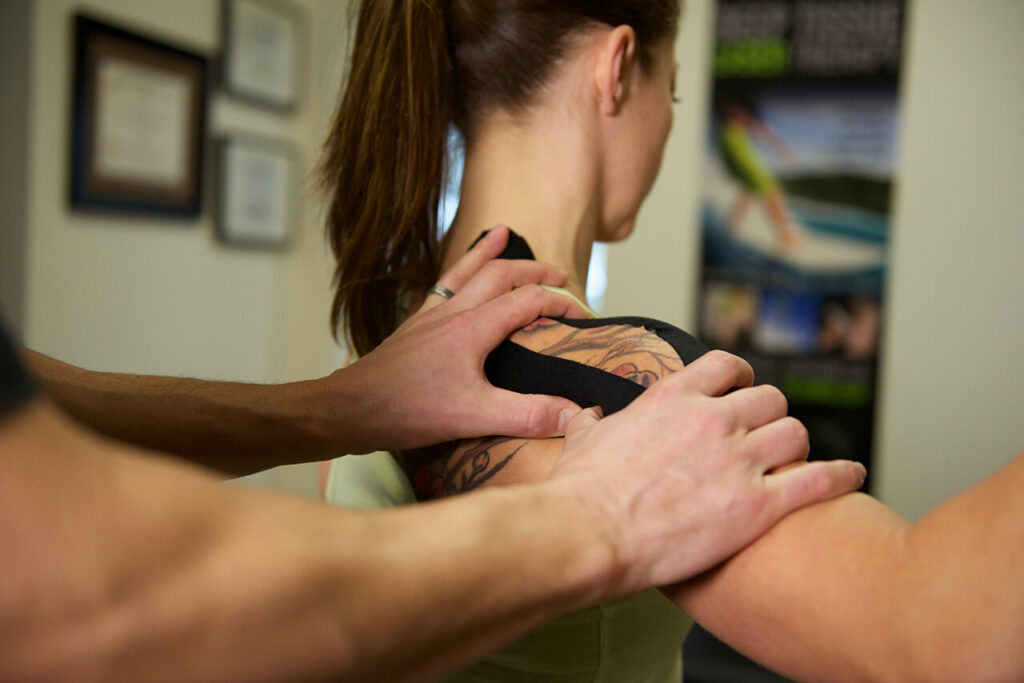
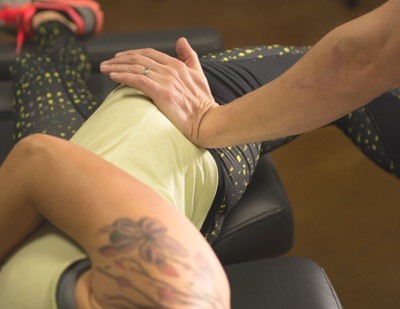
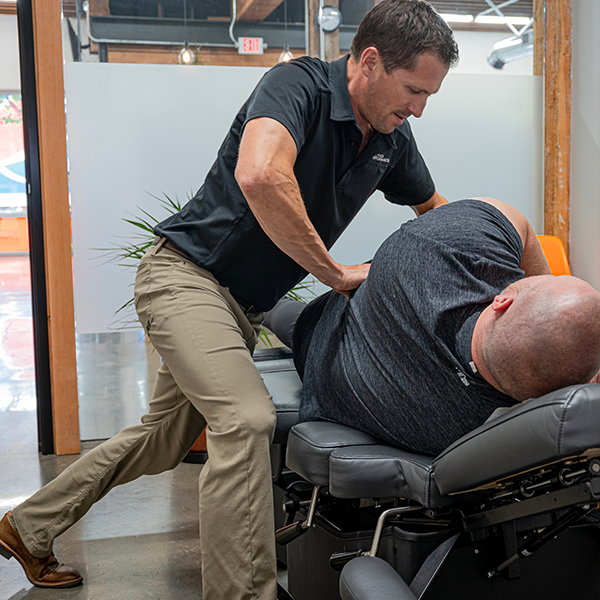
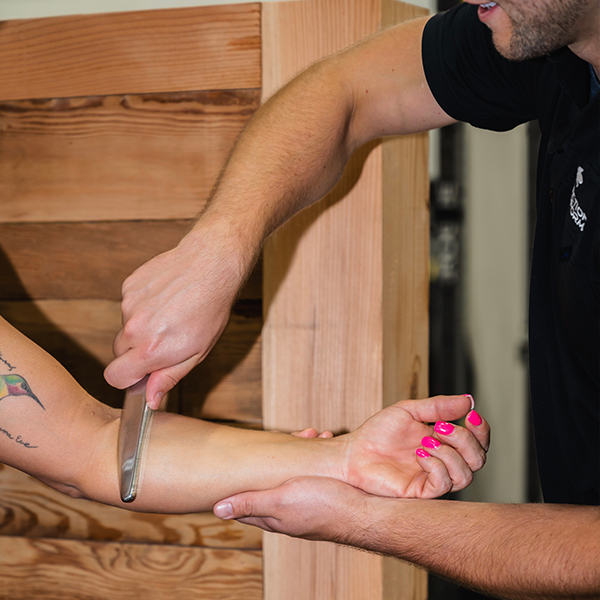
Manual therapy. Active Release Technique and IASTM applied precisely to the affected tendons and surrounding muscle. Joint mobilization of the elbow, wrist, and forearm. Cervical and thoracic spine work when those areas contribute to symptoms.
Progressive tendon loading. Structured loading protocols including isometric work for pain relief, heavy slow resistance training for tendon remodeling, and progressive loading toward your specific activity demands. This is the cornerstone of lasting recovery.
Class 4 laser therapy. Supports tissue healing and reduces pain during the active treatment phase.
Full kinetic chain work. Assessment and treatment of shoulder, scapular, neck, and wrist factors that may be contributing to elbow overload. Strengthening and motor control work where needed.
Activity modification coaching. Specific guidance on modifying aggravating activities, ergonomic adjustments at work, and pacing strategies that support recovery without complete rest.
What Recovery Looks Like
Most cases of lateral or medial epicondylitis show meaningful improvement within four to eight weeks of integrated care. Chronic cases that have been present for many months or years may take longer, but typically respond well to the right combination of shockwave and progressive loading. Throughout, objective markers like grip strength, pain-free tasks, and tenderness levels track your progress.
Book your performance evaluation today to start with a thorough elbow assessment and a real plan for your tennis or golfer’s elbow.
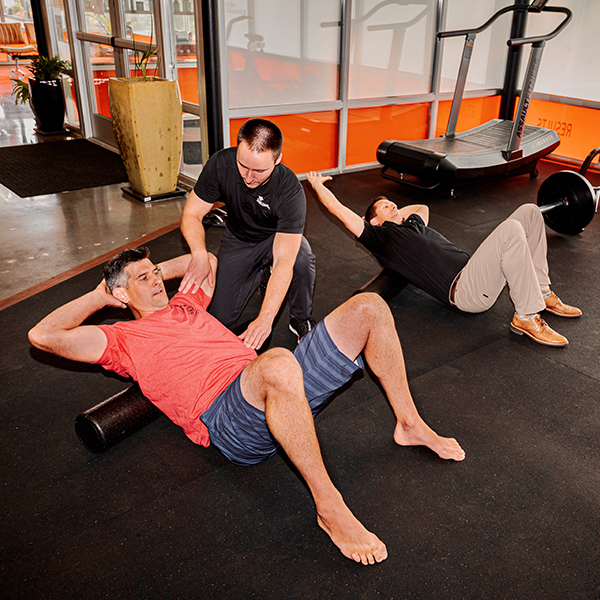
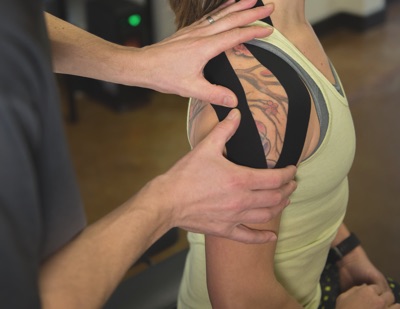
How we Treat Tennis Elbow and Golfer’s Elbow
Explore a full range of evidence-informed therapies designed to
reduce pain, restore movement, and support long-term recovery.

Common Symptoms You May Be Feeling
Tennis elbow and golfer’s elbow produce distinctive patterns. If these match your experience, evidence-based tendinopathy care is the right next step.
Book Your Performance Evaluation Today
Dealing with persistent elbow pain that limits your work, sport, or grip? Start with a thorough assessment and get a real plan.
Common Questions
Tennis elbow (lateral epicondylitis) affects the tendons on the outside of the elbow, the ones that extend the wrist. Golfer’s elbow (medial epicondylitis) affects the tendons on the inside of the elbow, the ones that flex the wrist and pronate the forearm. They share the same underlying pathology and respond to the same general treatment approach.
Usually not completely. Complete rest often makes tendinopathy worse by allowing the tendon to lose capacity. We typically modify specific aggravating activities while continuing general use and structured loading. Smart activity modification beats total rest.
Focused shockwave therapy has very strong research support for chronic lateral and medial epicondylitis. Most patients see meaningful improvement within three to six sessions, particularly in cases that have not responded to other care. We integrate it with progressive loading for the best outcomes.
Counterforce braces can provide short-term symptom relief during specific activities, but they do not address the underlying tendinopathy. We sometimes use them tactically during the recovery phase, but they are not a substitute for actual tendon rehabilitation.
Meet the Team
Our Chiropractic Sports Physicians combine advanced soft tissue training with progressive rehab so you move better, perform better, and live better.
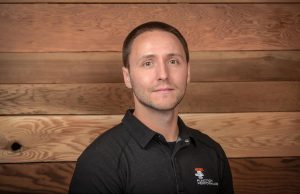
Ben Hokenson DC, DACBSP
Chiropractor
Meet Ben →Dr. Ben is a 2008 graduate of University of Western states earning his doctorate of chiropractic degree with many years of clinical practice and continual training.

Kyle Bangs DC, MS, CCSP, CSCS
Chiropractor
Meet Kyle →Dr. Kyle Bangs is a native to the Pacific Northwest — growing up hiking, fishing and staying active with various sports and recreation in SW Washington.
Certifications and Therapy







Why Choose Function Performance?
Shockwave Therapy Expertise
Focused shockwave is one of the most evidence-supported treatments for chronic epicondylitis. We integrate it skillfully into a complete loading-based plan.
Progressive Tendon Loading
Tendons heal through controlled loading, not rest. Our structured loading protocols restore tendon capacity and resolve chronic cases that other care could not.
Full Kinetic Chain Approach
Epicondylitis often reflects upstream issues at the shoulder, neck, or wrist. We assess and treat the full chain so the elbow stops being overloaded.
We don’t do cookie-cutter massage. We tailor everything to you.




