
Rotator Cuff and Labral Tears
Expert conservative management of partial rotator cuff and labral tears. Most resolve without surgery when treatment addresses the full kinetic chain.

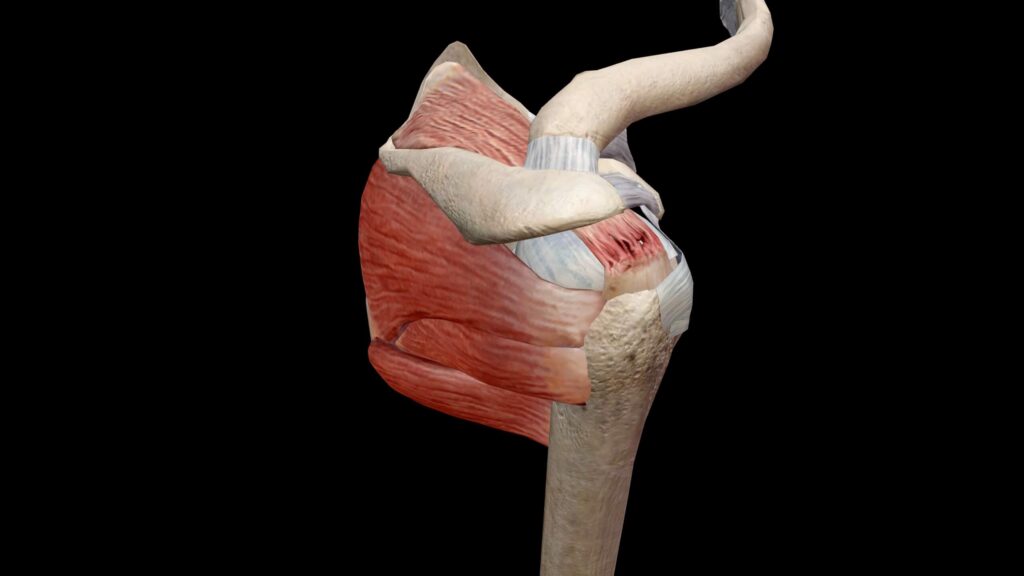
Rotator Cuff and Labral Tears: A More Nuanced View
Rotator cuff and labral tears are often presented as injuries that require surgery. The reality is more nuanced. The vast majority of partial rotator cuff tears, and many labral injuries, can be managed successfully with conservative care when that care is precise, comprehensive, and progressively loaded. Surgery has a real role, but it is rarely the first step.
At FPSC, we treat rotator cuff and labral injuries with a comprehensive approach that addresses the injury itself, the surrounding tissue compensations, and the movement patterns that typically contribute to these problems. Our goal is to get you back to full function conservatively when possible, and to coordinate surgical consultation efficiently when it is truly needed. We are honest about the difference.
Surgery Is Not Always the Answer
Most partial rotator cuff and labral tears respond to integrated conservative care. Surgery has a real role, but it is not the first step for most people.
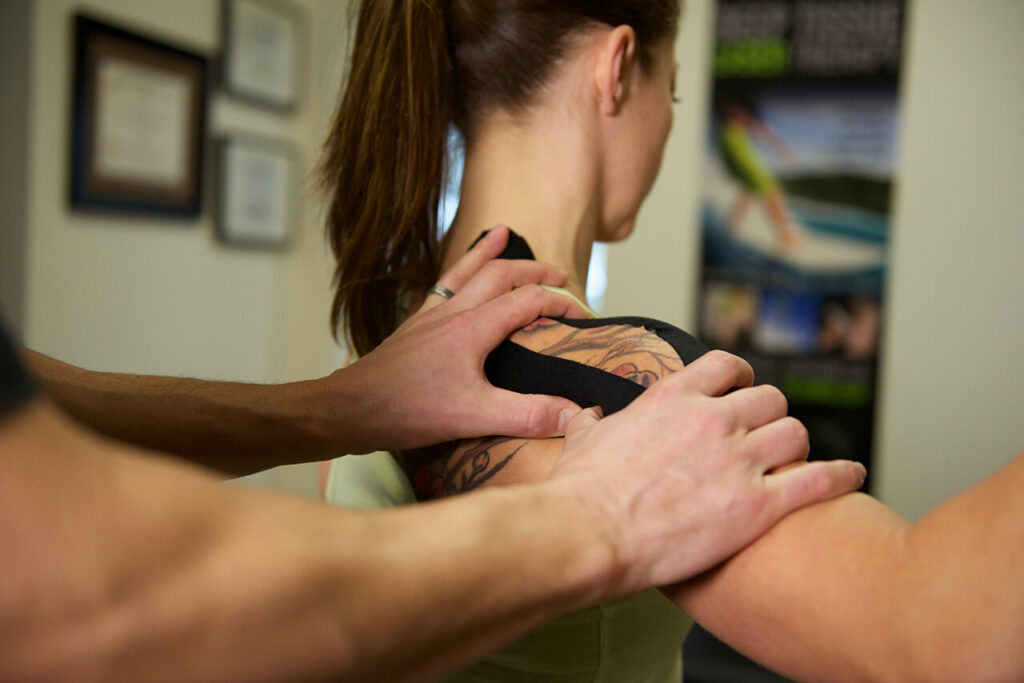
Precise Recovery: Our Approach to Rotator Cuff & Labral Tears
Understanding Rotator Cuff Injuries
The rotator cuff is a group of four muscles and tendons that stabilize the shoulder joint. Injury can range from strain and tendonitis to partial-thickness or full-thickness tears:
Rotator cuff strains and tendonitis. Acute inflammation or microscopic tearing that typically resolves within a few weeks of good care.
Partial-thickness tears. Incomplete tears that leave much of the tendon intact. Most respond very well to conservative care.
Full-thickness tears. Complete tears through the tendon. Younger or active patients often do well with surgical repair. Older or lower-demand patients frequently do well conservatively, depending on function.
Understanding Labral Injuries
The labrum is a ring of cartilage that deepens the shoulder socket and provides stability. Labral injuries include:
SLAP tears. Tears at the top of the labrum where the biceps tendon attaches. Common in throwing and overhead athletes.
Bankart lesions. Tears at the front of the labrum, typically after a shoulder dislocation or subluxation.
Degenerative labral injuries. Wear-related damage to the labrum, often in older shoulders. Frequently managed conservatively.
Many labral injuries produce clicking, catching, or instability rather than sharp pain, and conservative care addressing surrounding stability often produces excellent outcomes.
Our Treatment Approach
Thorough assessment. Orthopedic testing to confirm diagnosis, distinguish tear type, and identify contributing factors throughout the shoulder girdle and kinetic chain.
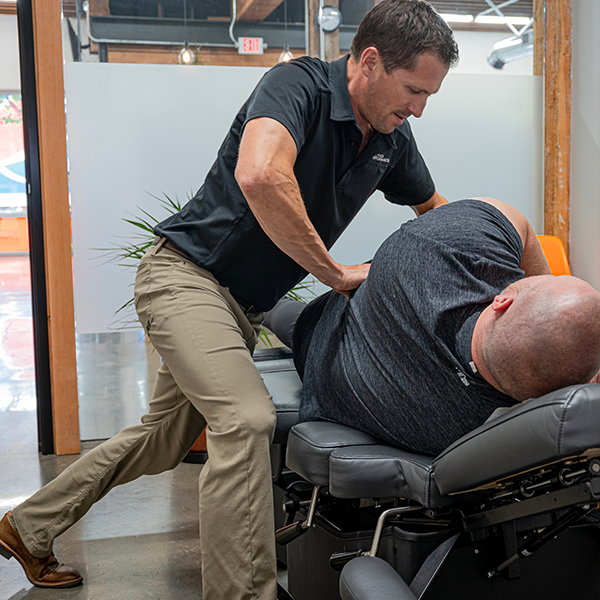
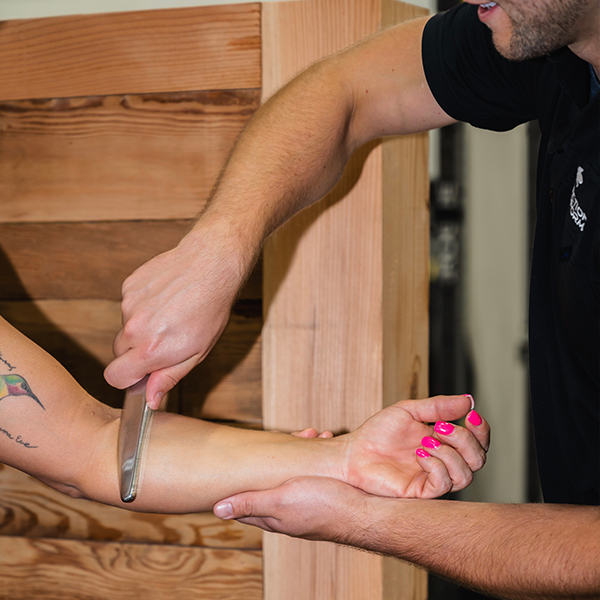
Manual therapy. Mobilization of the glenohumeral joint, scapulothoracic joint, thoracic spine, and cervical spine. Soft tissue work on restricted rotator cuff muscles, pec minor, and surrounding structures.
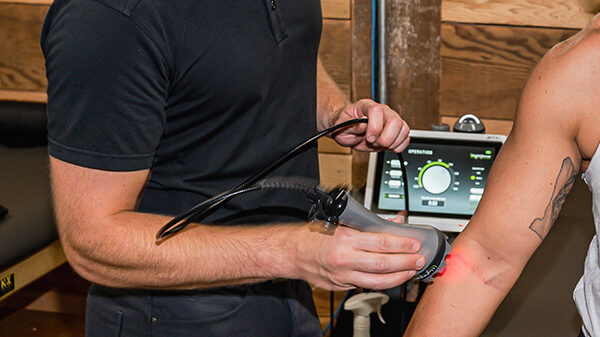
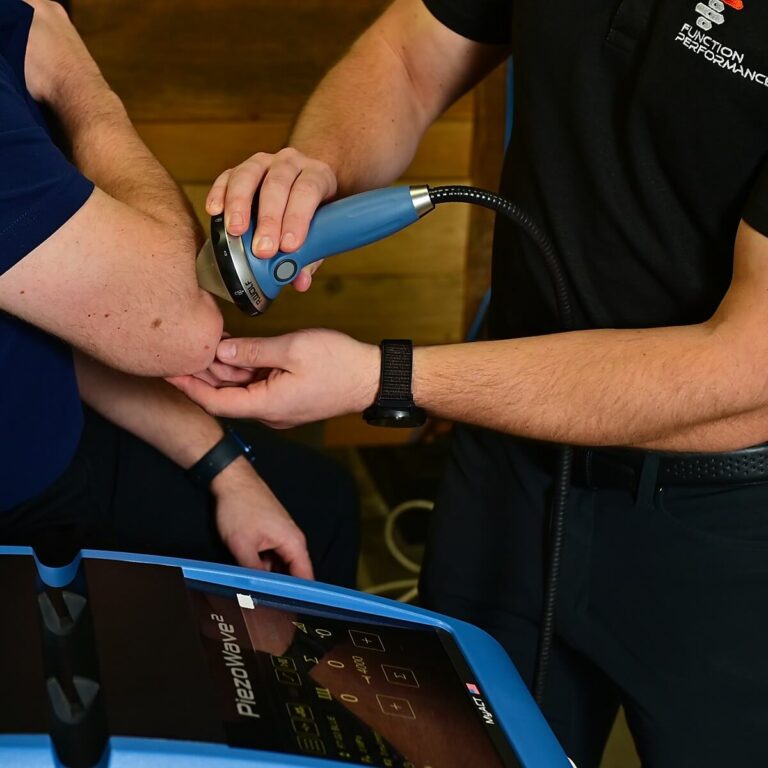
Advanced modalities. Class 4 laser therapy to support tissue healing and reduce inflammation. Shockwave therapy for chronic tendinopathies contributing to the presentation.
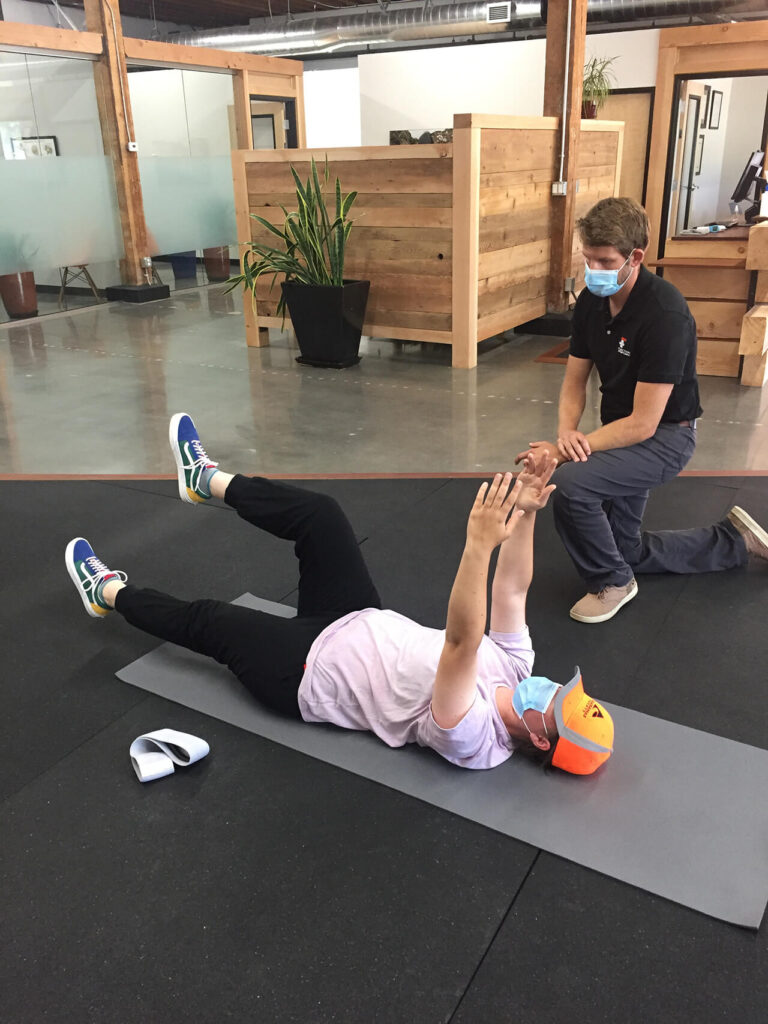
Progressive rehabilitation. Structured rotator cuff loading, starting from pain-free ranges and progressing systematically. Scapular stability work, motor control training, and ultimately sport-specific or work-specific loading.
Activity modification. Clear guidance on what to avoid, what to continue, and how to modify demanding activities during recovery.
When Surgery Is the Right Call
Some presentations benefit from surgical consultation:
-
- Full-thickness rotator cuff tears in active individuals, especially younger patients
-
- Significant weakness that is not improving with conservative care
-
- Instability or dislocation events indicating structural disruption of the labrum
-
- Failure to progress with appropriately delivered conservative care over a reasonable time frame
When these situations exist, we coordinate with orthopedic specialists efficiently and support your pre-surgical and post-surgical rehabilitation.
Honest Guidance Throughout
You will always know where you stand. We reassess regularly and tell you honestly whether you are on track. If conservative care is working, we continue. If surgical consultation is the right next step, we say so clearly.
Book your performance evaluation today to get an honest assessment of your rotator cuff or labral injury.
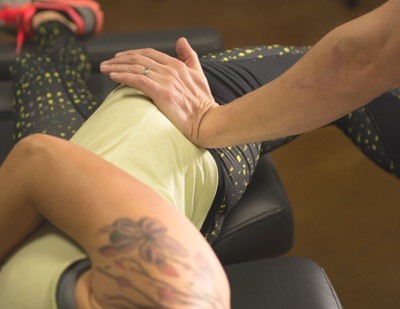
How we Treat Rotator Cuff and Labral Tears
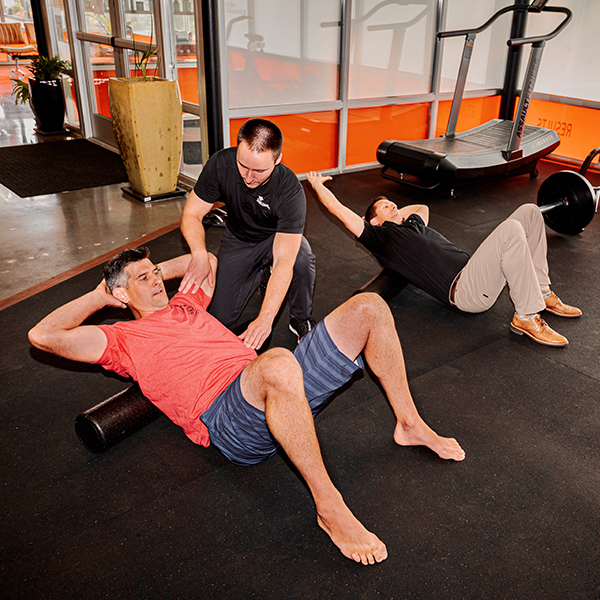
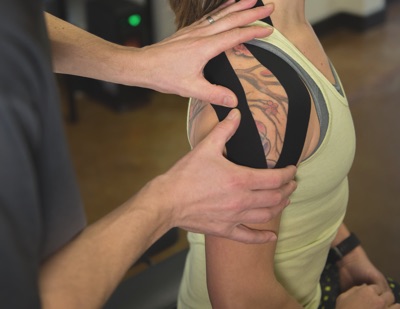
Explore a full range of evidence-informed therapies designed to
reduce pain, restore movement, and support long-term recovery.

Common Symptoms You May Be Feeling
Rotator cuff and labral injuries produce distinct patterns. If these match your experience, precise care is the right next step.
Book Your Performance Evaluation Today
Dealing with a known or suspected rotator cuff or labral injury? Start with a thorough assessment and get an honest path forward.
Common Questions
No. The majority of partial-thickness rotator cuff tears respond well to conservative care. Full-thickness tears, especially in younger or active patients, may require surgery, but conservative care still plays an important role before and after. We help you navigate the decision.
Tendon tissue does not fully heal the way a muscle strain does, but function can be completely restored in most cases. The surrounding muscles can compensate and the remaining tendon can be strengthened to handle full load, even with a partial tear present.
Most rotator cuff and labral injuries improve significantly within six to twelve weeks of integrated conservative care. Full return to demanding sport or overhead work may take longer, depending on the severity and your specific goals.
If you have not made appropriate progress within a reasonable time frame, or if your injury pattern truly requires surgical repair, we coordinate surgical consultation with the right specialist. We do not waste your time with care that is not producing results.
Meet the Team
Our Chiropractic Sports Physicians combine advanced soft tissue training with progressive rehab so you move better, perform better, and live better.
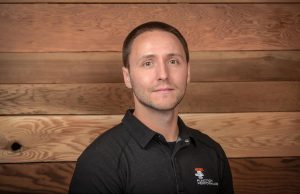
Ben Hokenson DC, DACBSP
Chiropractor
Meet Ben →Dr. Ben is a 2008 graduate of University of Western states earning his doctorate of chiropractic degree with many years of clinical practice and continual training.

Kyle Bangs DC, MS, CCSP, CSCS
Chiropractor
Meet Kyle →Dr. Kyle Bangs is a native to the Pacific Northwest — growing up hiking, fishing and staying active with various sports and recreation in SW Washington.
Certifications and Therapy





Why Choose Function Performance?
Accurate Diagnosis
Our thorough exam distinguishes between rotator cuff strains, partial tears, impingement, labral injuries, and combined presentations. Right diagnosis, right plan.
Comprehensive Conservative Care
Our integrated care combines manual therapy, neurodynamic rehab, modalities, and progressive loading to maximize the success of non-surgical management.
Honest About Surgery
We are direct about when surgery is the right path. When it is, we coordinate quickly with appropriate specialists and support your pre- and post-op care.

We don’t do cookie-cutter massage. We tailor everything to you.




