
Achilles Tendonitis
Chronic Achilles tendon pain and dysfunction. An overuse condition that responds well to evidence-based loading and targeted tissue treatment.
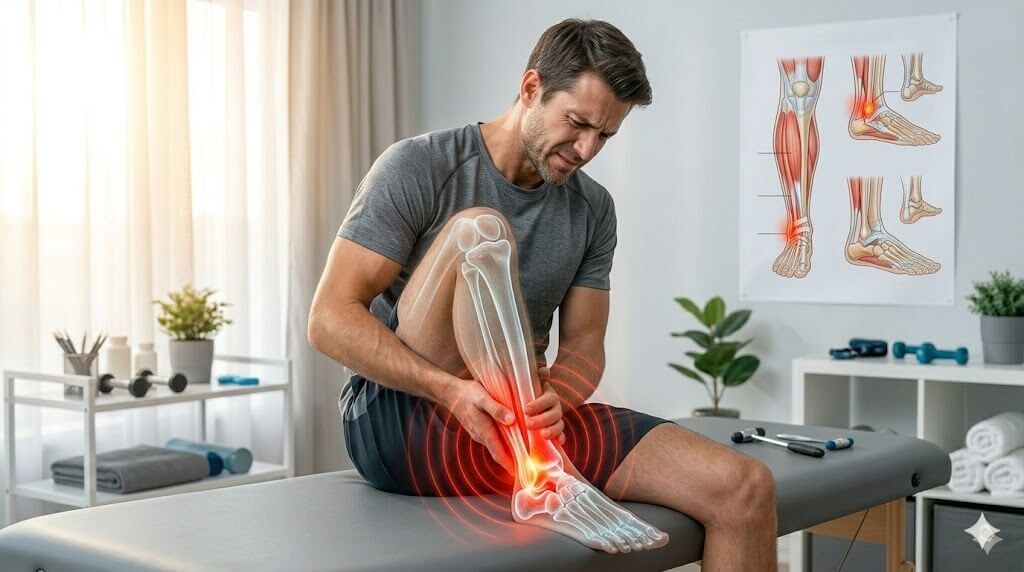

What Is Achilles Tendonitis?
Achilles tendonitis refers to pain and dysfunction in the Achilles tendon, the strong band of tissue connecting your calf muscles to your heel bone. When the condition is acute and inflammatory, it is appropriately called tendonitis. When it becomes chronic, the term Achilles tendinopathy is more accurate, because the tissue changes are degenerative rather than inflammatory.
Achilles problems are extremely common in runners, hikers, jumping athletes, and active adults. They can also affect less active people, particularly with sudden increases in walking, hiking, or hill work. At Function Performance Sport Chiropractic in Oregon City, we treat Achilles tendinopathy with an evidence-based combination of focused shockwave therapy, progressive tendon loading, and manual therapy.
This approach consistently produces results in cases that rest, ice, and stretching alone could not resolve. Most patients see meaningful improvement within four to eight weeks of structured care, and chronic cases that have lingered for a year or longer often respond well to the right combined protocol.
Chronic Achilles Pain Is Treatable
If rest and stretching have not resolved your Achilles pain, the right combination of shockwave and progressive loading often will.
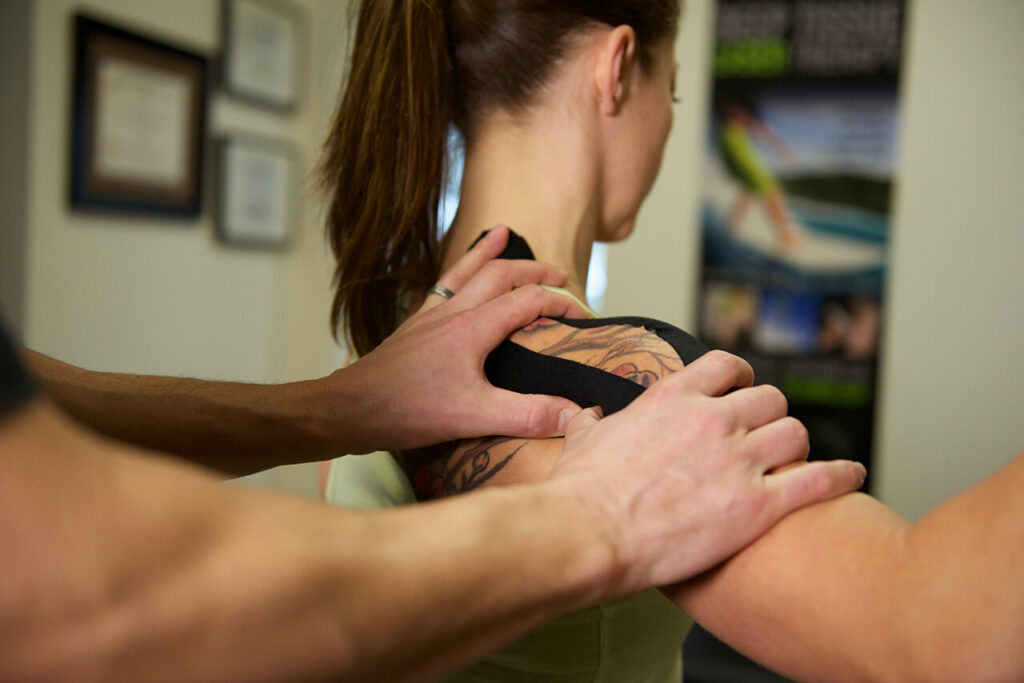
Breaking the Cycle of Chronic Achilles Pain
Two Different Patterns
The Achilles tendon can develop problems in two main locations, and the distinction matters for treatment:
Mid-portion tendinopathy. Pain and dysfunction along the tendon itself, typically two to six centimeters above the heel bone. The tendon often shows visible thickening in this area. This is the more common form and responds very well to standard tendon loading protocols.
Insertional tendinopathy. Pain right where the Achilles attaches to the heel bone (calcaneus). Sometimes associated with bony changes at the insertion. Requires modified loading that avoids deep dorsiflexion early on, since stretching the tendon at full ankle dorsiflexion can aggravate the insertional region.
Our assessment identifies which pattern you have and tailors the loading approach accordingly.
Why It Happens
Achilles tendinopathy develops when load placed on the tendon exceeds its current capacity. Several factors typically contribute:
-
- Sudden increases in running mileage or intensity
-
- Hill running or repeated jumping activities
-
- Insufficient recovery between demanding training sessions
-
- Calf weakness or imbalance
-
- Limited ankle mobility, particularly dorsiflexion
-
- Hip and core weakness that affects gait and amplifies Achilles loading
-
- Running form issues, particularly overstriding or pronation patterns
-
- Inappropriate footwear or sudden footwear changes
Most cases involve some combination of these factors. Addressing them all produces more durable recovery than treating just the tendon.
Why Generic Care Often Fails
Many Achilles cases linger for months because the standard advice (rest, ice, stretching) does not address what the tendon actually needs:
Inadequate loading. Tendons need progressive, controlled loading to heal. Rest allows the tendon to lose capacity, often making the problem worse over time.
Stretching does not remodel tissue. Stretching does not address the underlying tissue pathology in chronic tendinopathy. For insertional cases, stretching can actually aggravate the condition.
Missed upstream contributors. Hip weakness, ankle stiffness, and gait issues continue to overload the Achilles even when local treatment is applied.
Failure to use shockwave when indicated. For chronic cases, focused shockwave is one of the most evidence-supported tools available. Without it, many cases plateau.
Our Treatment Approach
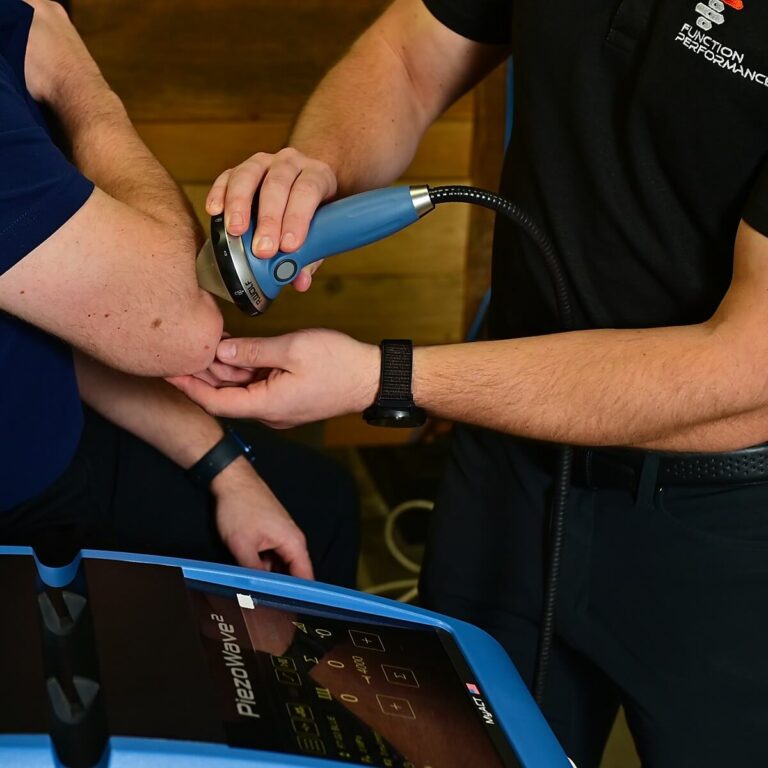
Focused shockwave therapy. For chronic Achilles tendinopathy, shockwave is often the most impactful single intervention. It stimulates tendon regeneration, breaks down fibrotic tissue, and produces real structural change. Most cases respond within three to six sessions.
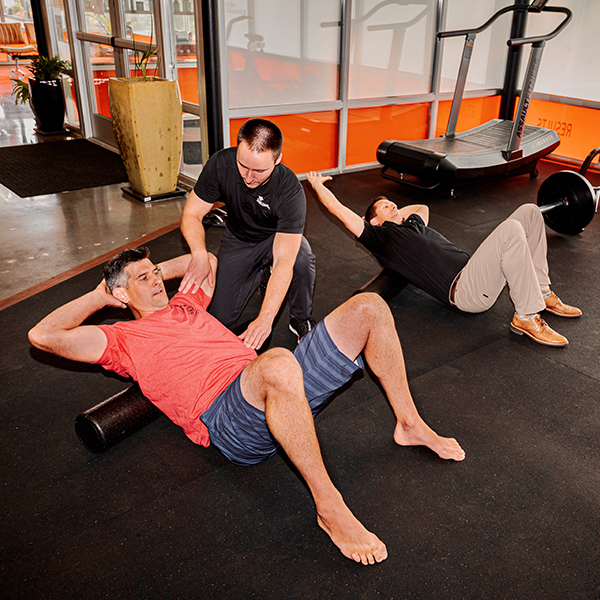
Progressive tendon loading. Structured loading protocols including isometric work for pain relief, heavy slow resistance training for tendon remodeling, and progressive plyometric and running loading toward your specific goals. This is the cornerstone of lasting recovery.
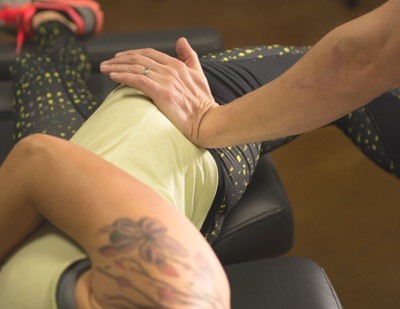
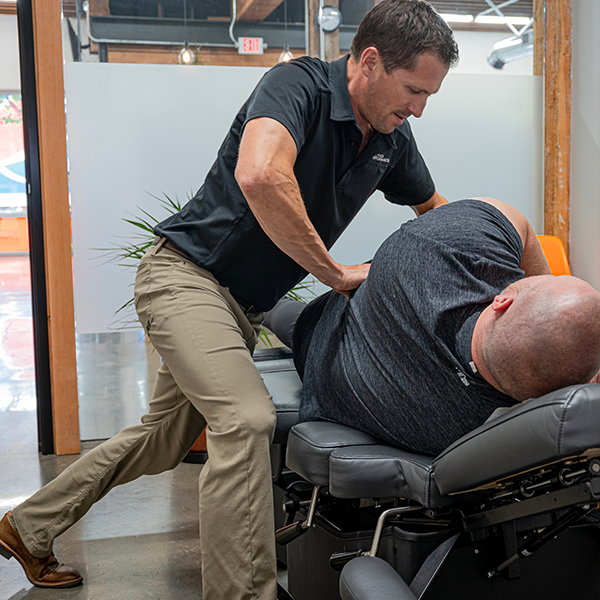
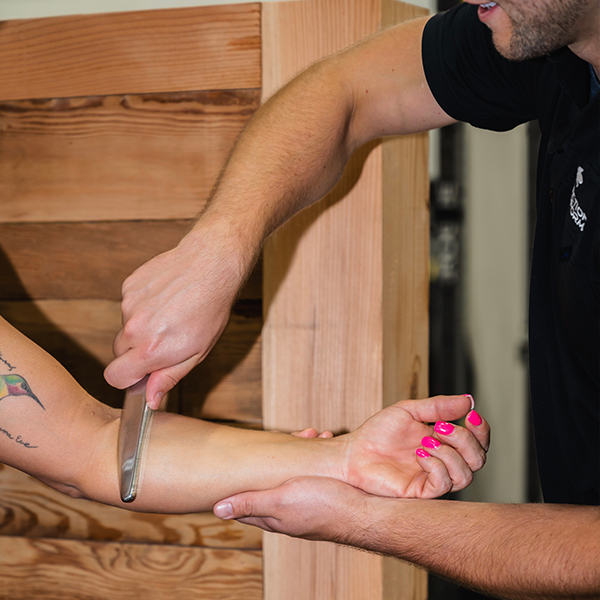
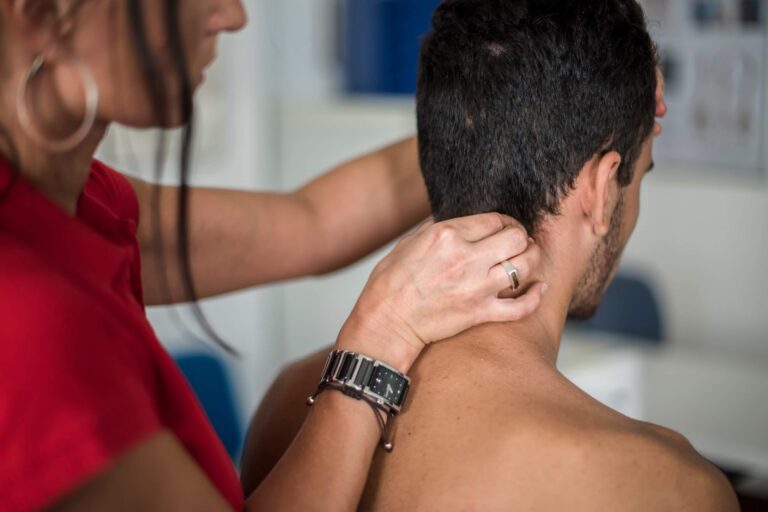
Manual therapy. Targeted soft tissue work on the gastrocnemius, soleus, and Achilles itself using ART, IASTM, and cupping. Joint mobilization of the ankle, subtalar joint, and proximal tibiofibular joint to restore mechanics that support tendon health.
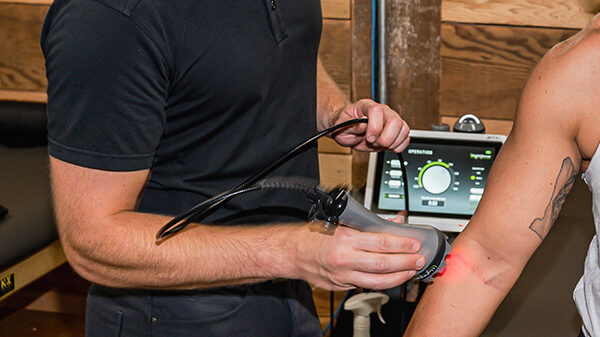
Class 4 laser therapy. Supports tissue healing and reduces pain during the active treatment phase.
Full kinetic chain work. Hip and core strengthening, ankle mobility work, and gait or running mechanics analysis. Identifying and addressing upstream factors that load the Achilles improves outcomes dramatically.
Activity modification coaching. Specific guidance on modifying training volume, intensity, and surface during recovery. Most patients can keep training in some form, which is better than complete rest.
What Recovery Looks Like
Most cases of Achilles tendinopathy show meaningful improvement within four to eight weeks of integrated care. Chronic cases that have been present for a year or longer may take more time but typically respond well to shockwave combined with progressive loading. Throughout, we track specific markers like morning stiffness, pain-free running distance, and single-leg heel raise strength so progress stays measurable.
Book your performance evaluation today to start with a thorough Achilles assessment and an evidence-based plan.
How we Treat Achilles Tendonitis
Explore a full range of evidence-informed therapies designed to
reduce pain, restore movement, and support long-term recovery.

Common Symptoms You May Be Feeling
Achilles tendinopathy produces distinct patterns. If these match your experience, evidence-based tendon care is the right next step.
Book Your Performance Evaluation Today
Dealing with persistent Achilles pain that has limited your running or training? Start with a thorough assessment and get a real plan.
Common Questions
Mid-portion tendinopathy occurs along the tendon a few centimeters above the heel. Insertional tendinopathy is right where the Achilles attaches to the heel bone. They share most treatment principles but insertional cases typically require modified loading that avoids deep ankle dorsiflexion early on.
Usually not completely. Modified running with reduced volume and intensity often works better than total rest for Achilles tendinopathy. Complete rest can cause the tendon to lose capacity. We help you figure out what training to modify, what to continue, and how to progress back to full mileage.
Focused shockwave therapy has very strong research support for chronic Achilles tendinopathy. Most patients see meaningful improvement within three to six sessions, particularly in cases that have not responded to other care. We integrate it with progressive loading for the best outcomes.
During sleep, the Achilles tendon shortens, and the first steps in the morning load the tendon suddenly. In a tendinopathic Achilles, this produces the characteristic morning stiffness or pain. The pattern usually eases as you move around and the tendon warms up, but it is a hallmark finding of the condition.
Meet the Team
Our Chiropractic Sports Physicians combine advanced soft tissue training with progressive rehab so you move better, perform better, and live better.
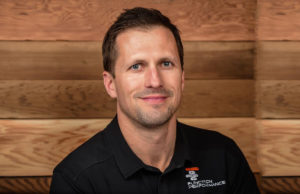
Ben Hokenson DC, DACBSP
Chiropractor
Meet Ben →Dr. Ben is a 2008 graduate of University of Western states earning his doctorate of chiropractic degree with many years of clinical practice and continual training.

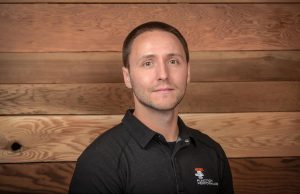
Kyle Bangs DC, MS, CCSP, CSCS
Chiropractor
Meet Kyle →Dr. Kyle Bangs is a native to the Pacific Northwest — growing up hiking, fishing and staying active with various sports and recreation in SW Washington.
Certifications and Therapy








Why Choose Function Performance?
Shockwave Therapy Expertise
Focused shockwave is one of the most evidence-supported treatments for chronic Achilles tendinopathy. We integrate it skillfully into a complete loading-based plan.
Progressive Loading Protocols
Achilles tendons heal through controlled loading, not rest. Our structured loading protocols restore tendon capacity and produce lasting recovery.
Full Kinetic Chain Focus
Hip and core weakness, ankle stiffness, and running mechanics all contribute to Achilles load. We address the full chain so the tendon stops getting overloaded.
We don’t do cookie-cutter massage. We tailor everything to you.




