
Morton's Neuroma
Sharp or burning pain between the third and fourth toes, often with numbness or the sensation of walking on a pebble. Treatable with targeted conservative care.
What Is Morton’s Neuroma?
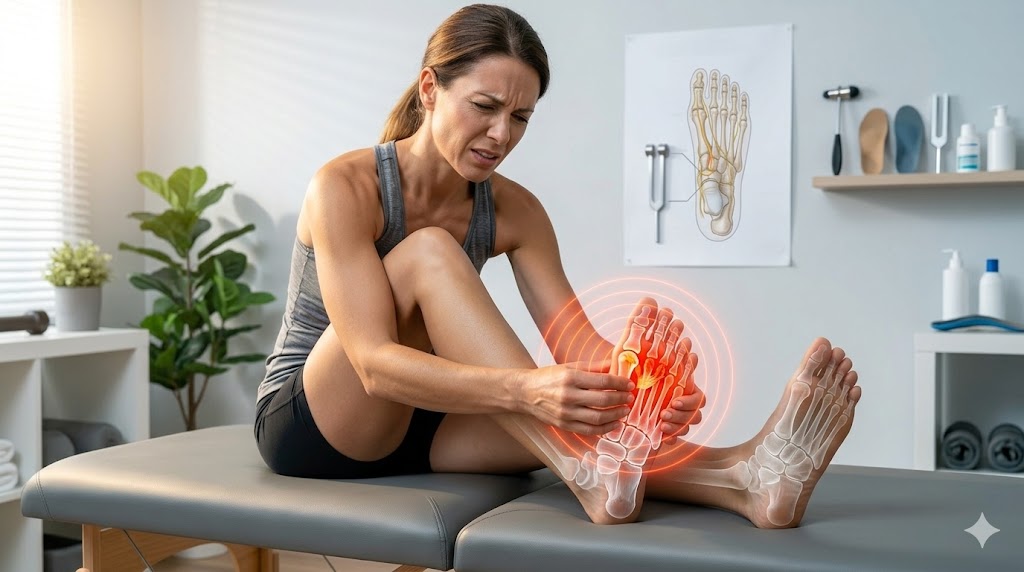
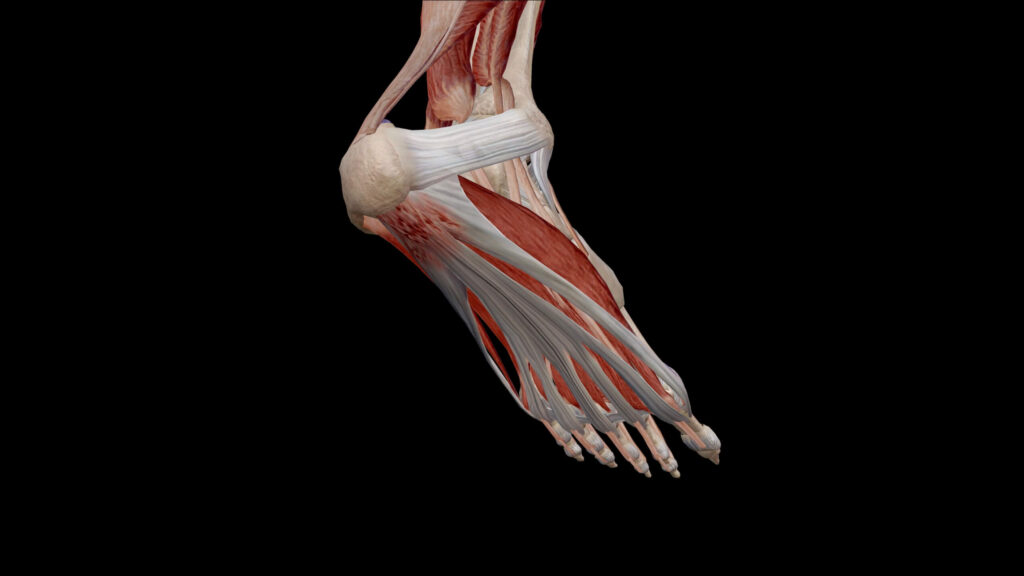
Morton’s neuroma is a thickening of the protective tissue around a plantar nerve in the ball of the foot. Despite the name, it is not actually a tumor. The term neuroma in this context refers to a fibrotic response of the nerve and surrounding tissue to chronic irritation or compression.
The condition most commonly affects the nerve between the third and fourth toes, producing sharp, burning pain in the ball of the foot, often with numbness and a distinctive sensation of walking on a pebble or wadded sock. Left unaddressed, it can progressively limit comfortable walking and activity.
At Function Performance Sport Chiropractic in Oregon City, we treat Morton’s neuroma with integrated conservative care that addresses the nerve, the mechanical factors driving irritation, and the broader foot function affecting forefoot loading. Most cases respond well without requiring injections or surgery.
Many cases of Morton’s neuroma respond well to conservative care when that care combines nerve-specific work, mechanical correction, and appropriate footwear guidance. Our integrated approach addresses the nerve irritation itself, the mechanical factors that created it, and the broader foot and ankle function that affects how the forefoot is loaded. Most patients make substantial progress without injections or surgery.
Conservative Care Can Work
Morton's neuroma is often jumped to injection or surgery, but many cases respond well to integrated conservative care when that care is precise and complete.
Precision Care: Our Approach to Morton’s Neuroma
Why It Happens
Morton’s neuroma develops when a plantar nerve is chronically irritated or compressed by surrounding structures. Several factors typically contribute:
Footwear. Tight-fitting shoes, especially those with narrow toe boxes or high heels, compress the forefoot and increase pressure on the plantar nerves. This is a major contributor to many cases.
Foot mechanics. Overpronation, high arches, or other foot mechanics issues can alter how force transmits through the forefoot, stressing specific nerves.
Activity load. High-impact activities, prolonged standing on hard surfaces, or sudden increases in walking or running can overload the forefoot nerves.
Restricted ankle mobility. Limited ankle dorsiflexion shifts load forward in the foot, increasing stress on the forefoot and its nerves.
Transverse arch collapse. Weakness or dysfunction of the intrinsic foot muscles that support the transverse arch across the ball of the foot can allow excessive pressure on the nerves between the metatarsal bones.
Telling It Apart From Other Foot Pain
Several conditions can produce forefoot pain. Accurate diagnosis matters:
Morton’s neuroma. Sharp, burning pain between the third and fourth toes (sometimes second and third). Feeling of walking on a pebble. Numbness and tingling into adjacent toes. Often worse with tight shoes.
Metatarsalgia. General ache or pain under the ball of the foot, without the specific nerve-type symptoms.
Capsulitis. Pain and sometimes swelling around a specific metatarsophalangeal joint, often the second toe.
Stress fractures. Pain over a specific metatarsal, worse with weight-bearing activities.
Our examination distinguishes between these presentations and guides the appropriate treatment plan.
Our Treatment Approach
Neurodynamic techniques. Specific work to restore normal mobility of the affected plantar nerve. This reduces the chronic irritation that drives neuroma formation.
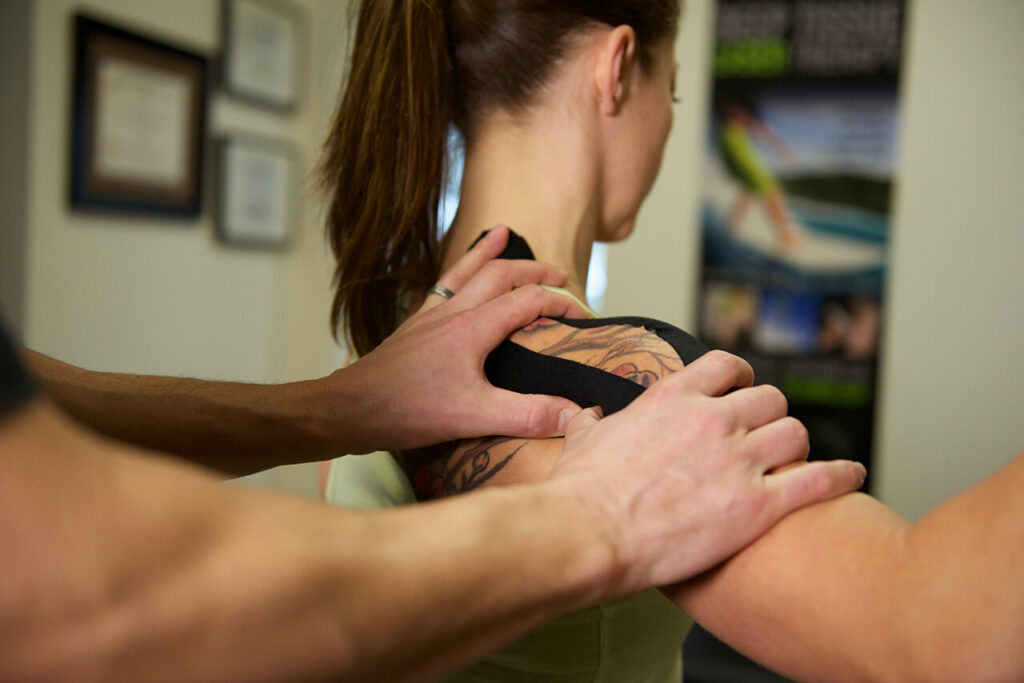
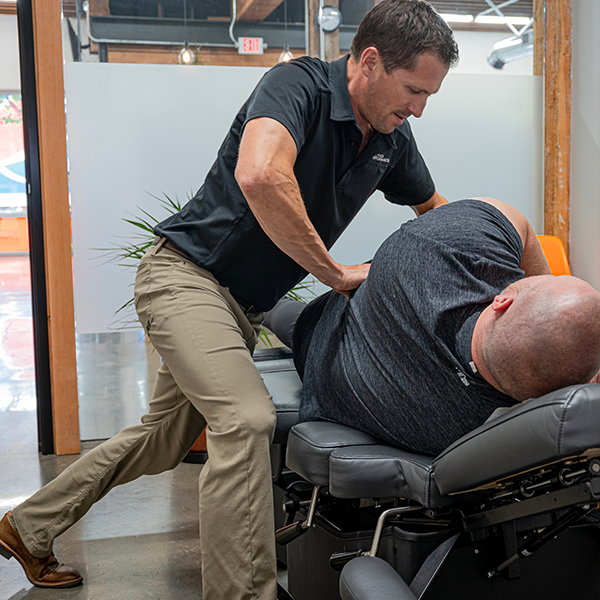
Manual therapy. Targeted soft tissue work on the intrinsic foot muscles, plantar fascia, and calf. Mobilization of the metatarsal bones and their associated joints. Work on the transverse arch.
Ankle and foot joint work. Mobilization of restricted ankle dorsiflexion and related foot joints to normalize how force transmits through the forefoot.
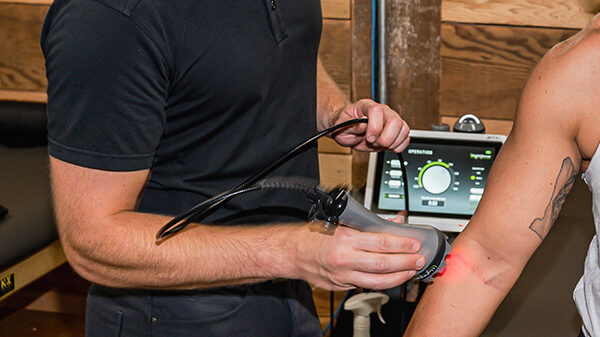
Class 4 laser therapy. Reduction of inflammation around the affected nerve.
Footwear and orthotic guidance. Specific recommendations for shoe types and styles that protect the affected area. Metatarsal pads or targeted inserts when appropriate to redistribute pressure away from the affected nerve.
Intrinsic foot strengthening. Exercises to rebuild the strength and control of the foot’s internal muscles, supporting the transverse arch and improving long-term foot function.
Gait analysis. Evaluation of how you walk and guidance on addressing patterns that contribute to forefoot stress.
When Other Options Matter
Some cases may benefit from specific injections (corticosteroid or alcohol sclerosing injections) or, rarely, surgical consideration. We are honest about when these options are reasonable and coordinate with the appropriate provider when they are warranted. Most cases, however, do not reach these steps when comprehensive conservative care is delivered appropriately.
What Recovery Looks Like
Most Morton’s neuroma cases show meaningful improvement within four to eight weeks of integrated care. Chronic or advanced cases may take longer but typically respond well to the right combination of nerve work, mechanical correction, and footwear changes. Throughout, we track symptom intensity, walking tolerance, and shoe comfort to ensure progress is visible.
Book your performance evaluation today to get a thorough assessment and a real plan for your Morton’s neuroma.

How we Treat Morton’s Neuroma
Explore a full range of evidence-informed therapies designed to
reduce pain, restore movement, and support long-term recovery.

Common Symptoms You May Be Feeling
Morton’s neuroma produces distinctive symptoms. If these match your experience, targeted care is the right next step.
Book Your Performance Evaluation Today
Dealing with sharp or burning forefoot pain? Start with a thorough assessment and explore a conservative care plan first.

Common Questions
No, despite the name. A Morton’s neuroma is a thickening of the protective tissue around a nerve, not a tumor. It develops in response to chronic irritation or compression. The term neuroma in this context is historical and somewhat misleading.
Sometimes injections are appropriate, but many Morton’s neuroma cases respond well to integrated conservative care first. We recommend starting with conservative treatment and consider injections if needed. We coordinate with the appropriate provider when that step is warranted.
Shoes with a wide toe box, minimal forefoot compression, and appropriate cushioning are generally best. We often recommend metatarsal pads or specific inserts to redistribute pressure. Our assessment will guide the right footwear for your specific presentation.
Surgery is typically reserved for cases that have not responded to comprehensive conservative care, including injections, over a reasonable time frame. Most patients do not reach this point. When surgery is appropriate, we coordinate with the right specialist.
Meet the Team
Our Chiropractic Sports Physicians combine advanced soft tissue training with progressive rehab so you move better, perform better, and live better.
Ben Hokenson DC, DACBSP
Chiropractor
Meet Ben →Dr. Ben is a 2008 graduate of University of Western states earning his doctorate of chiropractic degree with many years of clinical practice and continual training.

Kyle Bangs DC, MS, CCSP, CSCS
Chiropractor
Meet Kyle →Dr. Kyle Bangs is a native to the Pacific Northwest — growing up hiking, fishing and staying active with various sports and recreation in SW Washington.


Certifications and Therapy






Why Choose Function Performance?
Neurodynamic Expertise
Our specialized training in nerve conditions allows us to treat the nerve component of Morton's neuroma directly, not just address mechanics.
Full Mechanical Assessment
Morton's neuroma reflects forefoot loading patterns. We assess foot mechanics, ankle mobility, and gait to address everything contributing to the condition.
Honest About Options
We are direct about when injections or surgery are reasonable considerations. For most cases, integrated conservative care produces lasting results first.


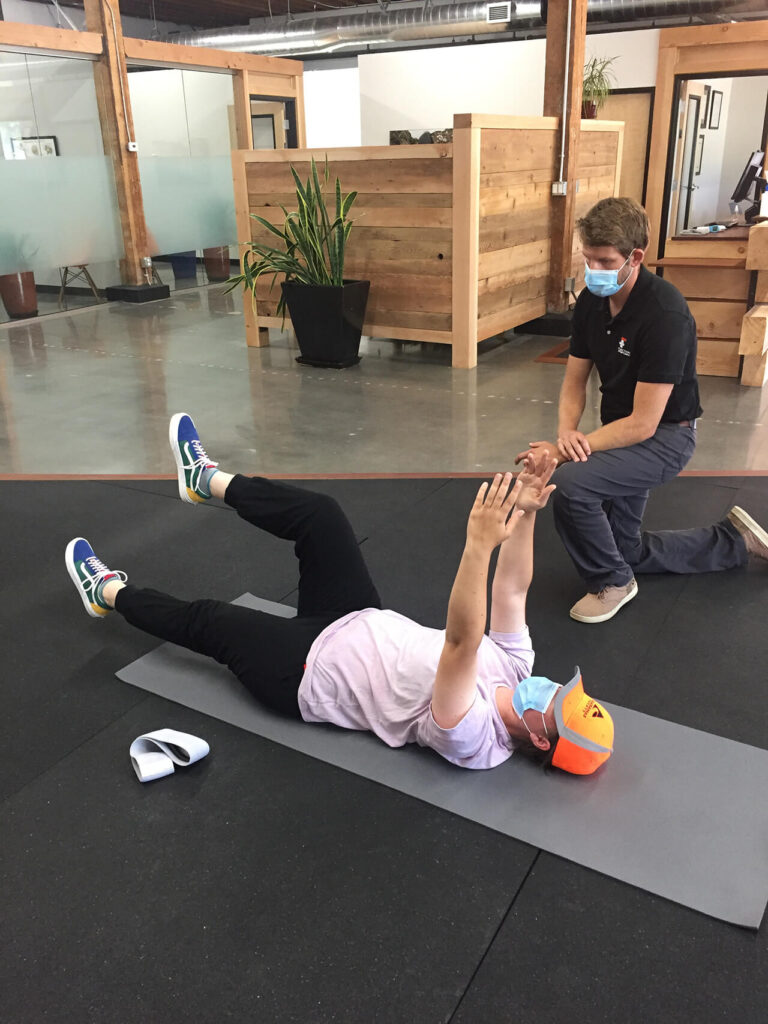
We don’t do cookie-cutter massage. We tailor everything to you.




